
First triathlon: 10 tips to nail your first Sprint
 © Sylvain Thomas/Ironman
What training should you follow? What gear do you really need? How do you stay calm on race day? Here are the questions everyone asks before their first triathlon, especially over the Sprint distance.
Good news: you don’t need to be an elite athlete to make it to the finish line. The Sprint triathlon, also known as the S distance, is the perfect format to discover the sport. With its 750 m swim, 20 km bike and 5 km run, it’s a challenge that’s within reach for any athlete who already practices one of the three disciplines... or even none of them.
With the right prep, your first triathlon can quickly become a memorable experience. Here are ten golden rules to help you nail your first Sprint triathlon, from training all the way to the finish line.
1) Know the rules before the start
Triathlon has a few specific rules. They’re easy to understand, but essential for safety and fair play.
Take time to read the race rules, the organizer’s pre-race info, and the Fédération Française de Triathlon guidelines. It’ll save you a lot of second-guessing on race morning.
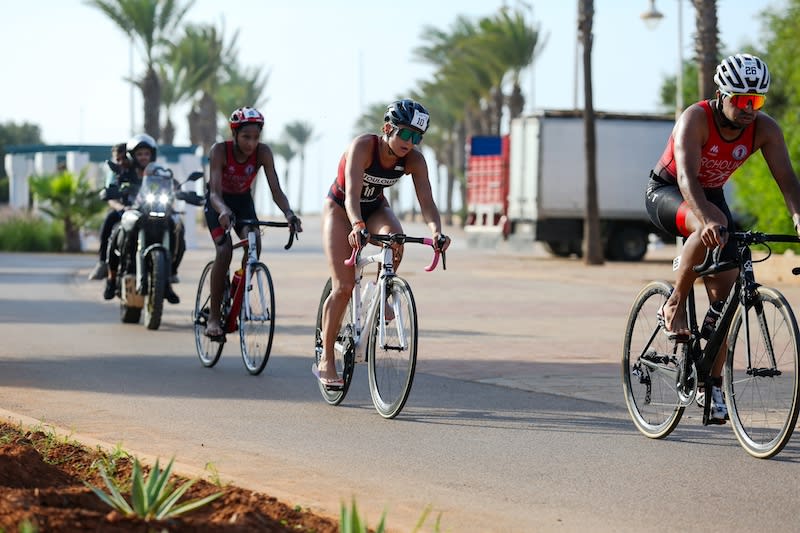
The classic example is the helmet. In triathlon, it must be buckled before you touch your bike in transition (T1). And you can’t unbuckle it until your bike is racked back in its spot at the second transition (T2). Simple... but breaking it often means a penalty.
2) Get ready for open-water swimming
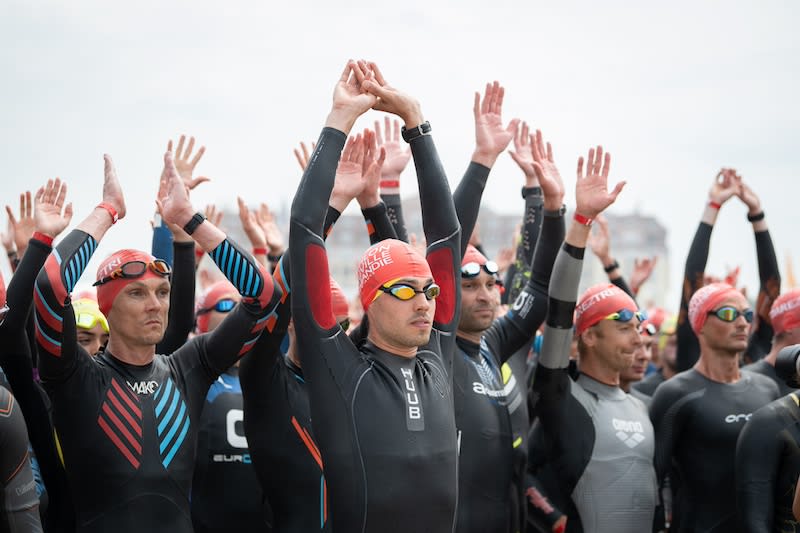
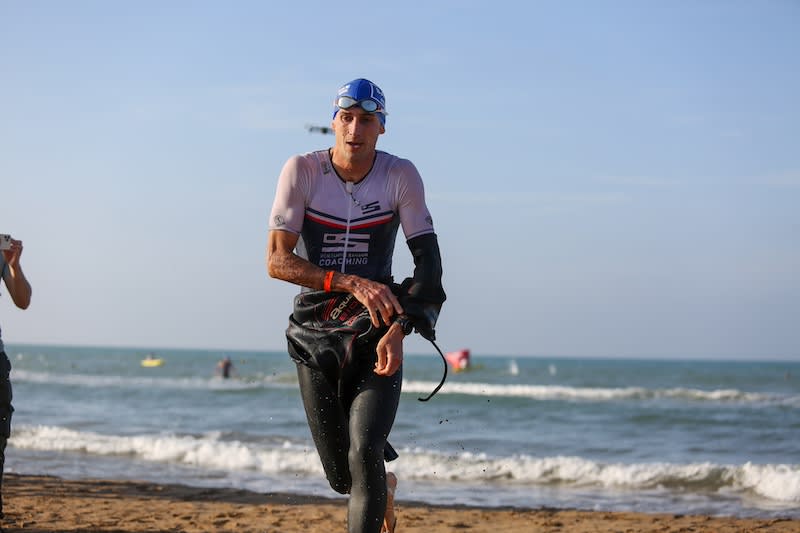
Swimming is often the most intimidating leg for first-timers, especially in a lake or the sea.
If your first triathlon isn’t in a pool, plan several open-water sessions before race day. Nothing beats real-world practice for dealing with reduced visibility, sighting, pace changes, and contact with other athletes.
Ideally, swim in a group to mimic mass-start conditions. You’ll build confidence quickly and arrive calmer on race day.
If you’d prefer a more gradual first experience, some races offer time-trial starts with a few seconds between athletes, or a rolling start in small groups of 4 or 5.
 © Sandrine-Boyer-Engel
 © Sebastien Huruguen/Frenchman
 © Sebastien Huruguen/Frenchman
3) In transition, keep it simple and efficient
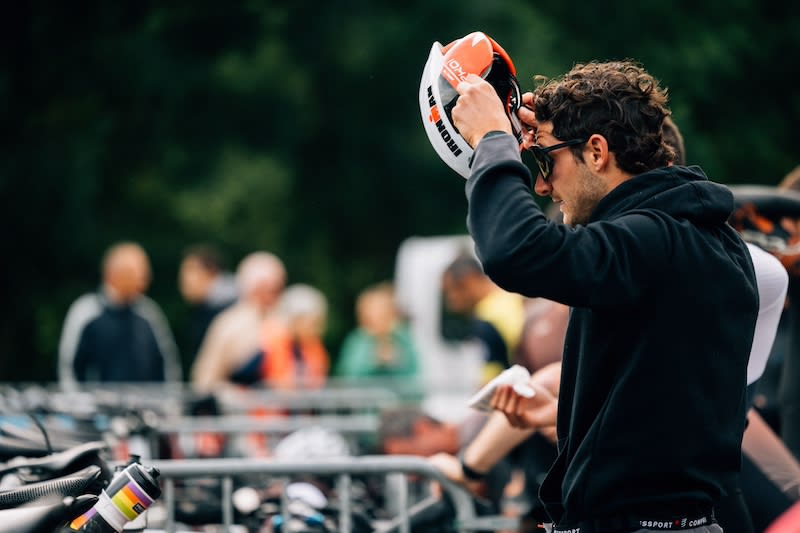
The transition area can feel intimidating in your first triathlon. But there’s no need to turn your spot into a bike workshop.
Most races require you to keep gear next to your bike to a minimum. Stick to the essentials:
Helmet
Cycling shoes (with socks if you’re worried about running barefoot)
Sunglasses if needed
Running shoes
A cap or visor
The simpler your setup, the smoother your transitions.
 © Agence Cairn/Triathlon de Luchon
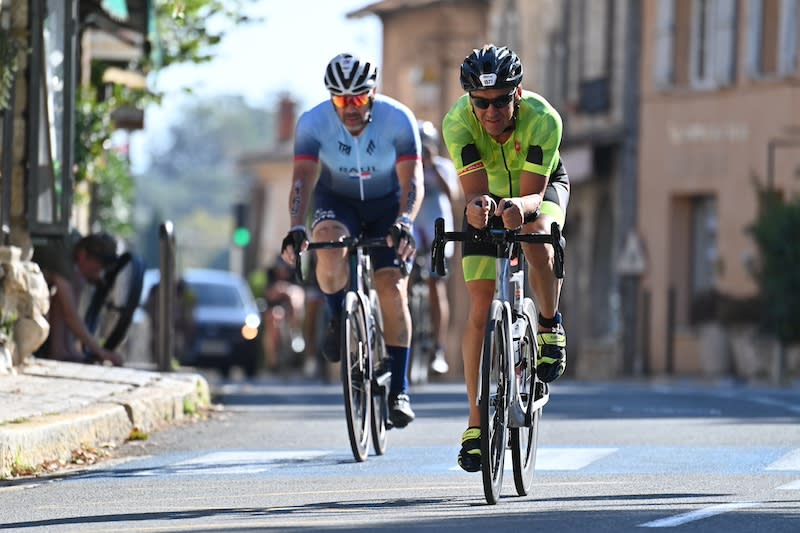 © Sylvain Thomas/Ironman
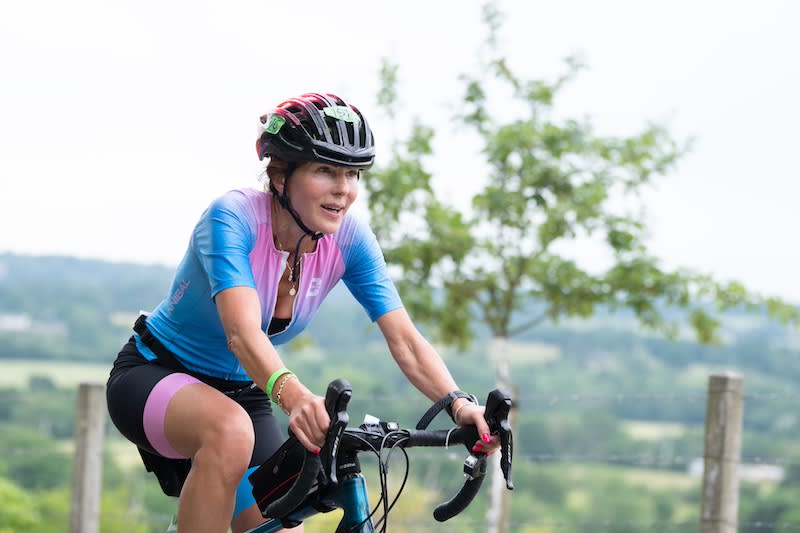 © Sandrine-Boyer-Engel
4) Plan for gear mishaps
Goggles snapping minutes before the start, a forgotten race belt, or a punctured tube can quickly turn a great day into a headache.
Always pack a few backup essentials in your triathlon bag: a second pair of goggles, an extra race belt, an inner tube, tire levers, and a mini pump or a CO₂ cartridge. You hope you’ll never need them... but you’ll be glad you brought them if something goes wrong.
5) Think ahead about the small details that change everything
People rarely talk about it, but pre-race logistics are part of what makes a triathlon go well.
As soon as you get to the venue, locate the toilets. Lines often get long in the last few minutes before the start. And throw a bit of toilet paper in your bag too: a tiny detail that can save you from a bad surprise.
6) Get your legs ready for the bike-to-run transition
Every triathlete remembers it: the first meters of running after the bike feel weird. Your legs can feel heavy, sometimes wobbly, like they’re not responding normally.
That’s completely normal.
To help your body adapt, regularly include bike-to-run bricks in training. Just a few kilometers of running right after a ride is enough to make that sensation fade over the weeks.
7) Add one key session to your build-up
If you had to pick just one workout to prepare for a Sprint triathlon, it would be this one.
Warm-up
1 km run, building the pace progressively.
Main set
3 repeats of:
- 7 km bike at a strong but controlled pace
- 1.5 km run at a brisk pace.
Take three minutes of recovery between each repeat.
Cool down
3 km easy spinning on the bike.
This session builds endurance, sharpens your transitions, and prepares you for the feel of race day.
8) Be able to cover the distances before you sign up
Before you toe the line for your first Sprint triathlon, make sure you can complete each distance separately: 750 m swim, 20 km bike, and 5 km run.
Next, start linking two disciplines in training: swim-to-bike or bike-to-run.
Finally, build up your sessions until you’re going slightly beyond race distance. Being able to do around 1 km of swimming, 25 km of cycling, and 6 to 7 km of running gives you a comfortable safety margin on race day.
9) Invest in a tri-suit and a wetsuit
A wetsuit can be hugely reassuring for open-water swimming. The material and thickness of the neoprene help weaker swimmers, and everyone else, float better, sit higher in the water, and feel safer.
The other must-have in a triathlete’s kit is the tri-suit: designed to be worn for all three disciplines (under the wetsuit for the swim), it dries quickly afterward, stays comfortable on the bike (thanks to a small built-in chamois), and lets you run without changing. It also saves precious time in transition.
© Sandrine-Boyer-EngelOne-piece and two-piece models each have their advantages. Whatever you choose, prioritize breathable fabric, quick drying, and easy-access pockets to carry your nutrition.
10) Enjoy the experience!
You’ll remember your first triathlon far longer than your finish time. Don’t obsess over your placing or your final time. The main goal is to soak up triathlon’s unique atmosphere, learn, and most of all have fun.
Take it all in: the pre-start nerves, the cheers, the transitions, the shared effort with the other athletes, and finally the finish line. Because once that first Sprint triathlon is done, there’s a good chance you’ll only want one thing... to sign up for the next one, and maybe step up to a longer distance.
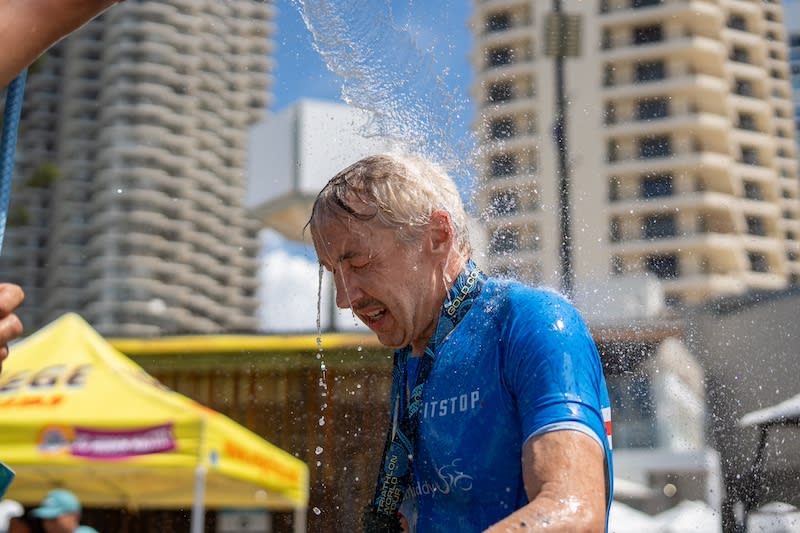 © T100 Triathlon