
Which race format should you pick for your first triathlon?
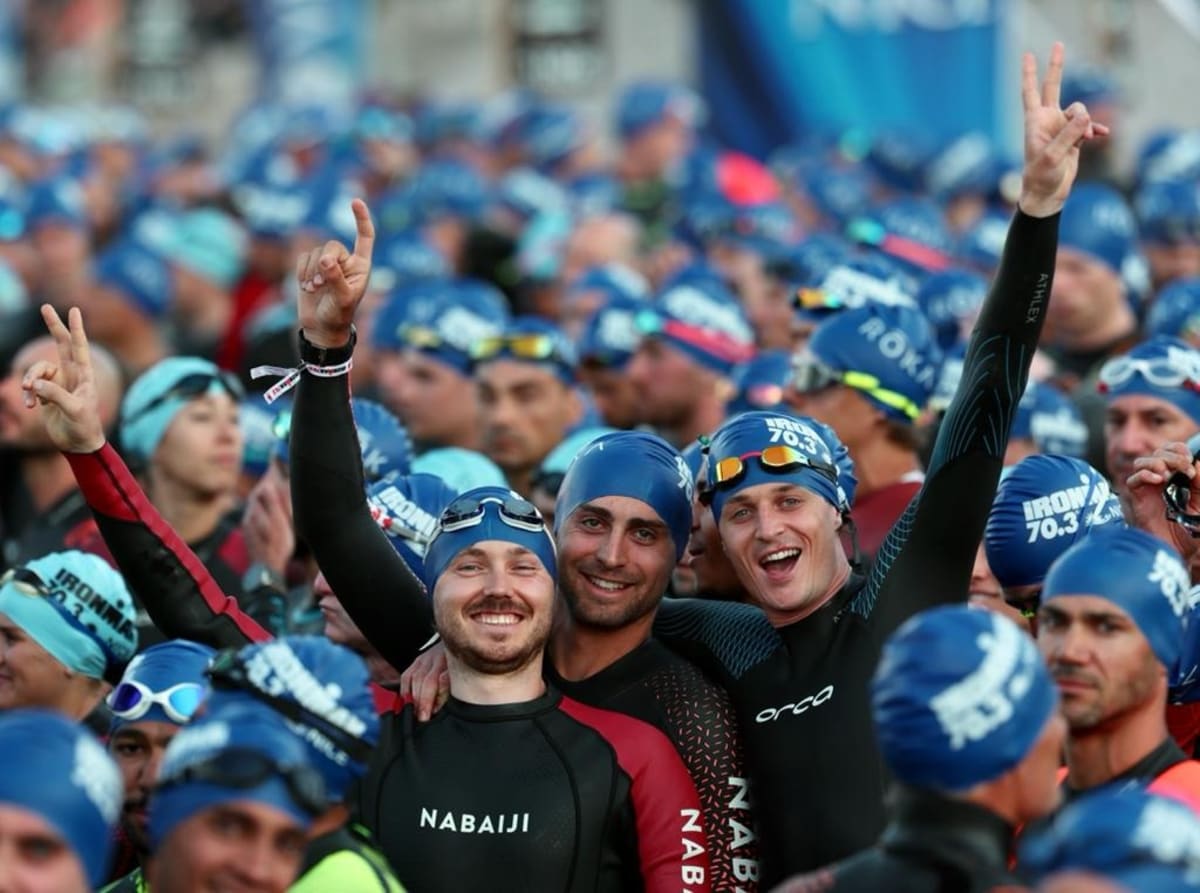
Triathlon comes in plenty of beginner-friendly formats, depending on your goals, what you enjoy, your skills, and your athletic background. Here’s how to choose the right one to kick off your triathlon “career.”
That’s it, it’s decided! You’re getting into triathlon. You’re right to do it, and you’ve got our full support, because it really is the greatest sport out there. You want to string together three basic, fundamental endurance disciplines (swim-bike-run), and dream of swimming like Vincent Luis, riding like Sam Laidlow and hammering the run like Cassandre Beaugrand. Great plan. But before you get there, expect a bit of work. And above all, a mix of humility, patience, grit and consistency in training. With that recipe, nothing’s out of reach.
 © ActivImages
Three disciplines, built to ramp up
Triathlon is a thought-out sequence, and the order of the disciplines isn’t random.
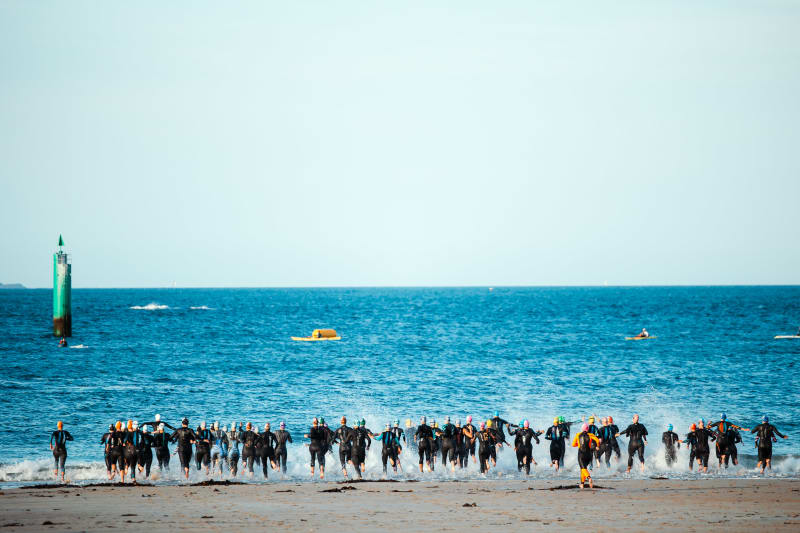
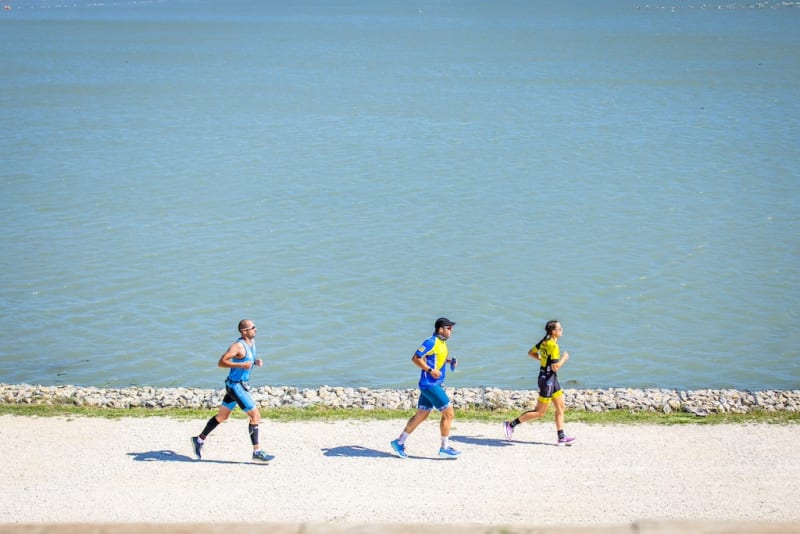
You start with a supported sport (swimming), the one that most often intimidates newcomers, then move to a semi-supported sport (cycling) where drafting is usually banned and you can’t sit on someone’s wheel, and you finish with the most “brutal” of the three: running, a weight-bearing sport that will pound your joints the most. Triathlon is therefore built to ramp up in terms of muscular and joint stress, so the load increases progressively rather than all at once.
 © PuurFilm - Fabien Boukla
 © FFTRI-Maxime Delobel
 © PuurFilm - Fabien Boukla
 © PuurFilm - Fabien Boukla
Another advantage of triathlon (or “triple effort”) is the sheer range of formats, progressive and suited to everyone’s abilities, whether you’ve got a serious sporting background or you’re starting from scratch.
From Triathlon XS to XXL
The French Triathlon Federation (FFTRI), which officially governs the sport and sets the “rules of the game,” defines the following distances (they can vary if you race abroad):
-XS distance: 400 m swim / 10 km bike / 2.5 km run
This is the shortest adult format and the most accessible. Perfect for discovering the sport and its specifics.
-S distance: 750 m swim / 20 km bike / 5 km run
A very common race format. Younger athletes often shine here because it’s typically raced at high intensity (full gas, pretty much the whole way). At the elite level, it’s frequently the go-to format for World Cups or certain legs of the short-course World Championship series, because it’s not too muscle-damaging and makes it easier to back up with other races in the following weeks.
Top athletes usually finish in about an hour (or a bit under). Average time (mid-pack) is 1:40 to 1:45 for men and 1:50 to 1:55 for women (*).
-M distance: 1500 m swim / 40 km bike / 10 km run
This is the “Olympic” distance, raced at the Games (triathlon joined the Olympic program in 2000 in Sydney). Things get serious here: compared with the shorter formats, you’ll need more consistent training and more weekly volume if you want to finish in reasonable comfort.
Top athletes cover the distance in 1:45 to 2:00 (depending on elevation on the bike and run courses). The commonly observed average time (*) is 2:52 for men and 3:07 for women, which gives you a ballpark for mid-pack.
 © ActiveImages
-L distance: 3000 m swim / 80 km bike / 20 km run
This is the first “long-course” format listed by FFTRI.
But it’s less popular than the “other” L format: 1900 m swim / 90 km bike / 21.1 km run. That one (also known as a Half-Ironman) drops you straight into the long-distance triathlon mythos, while still staying accessible, even though it demands serious, consistent training. It’s demanding but reasonable: not quite “ultra,” yet already a real challenge for committed age-groupers. Moving from M to L is a logical step as experience builds, and a first real milestone on the road to long course. You typically bounce back fairly quickly from this kind of effort, as long as you give recovery the time it deserves.
On this format, the average time is around 5:45 for men and 6:15 for women (*).
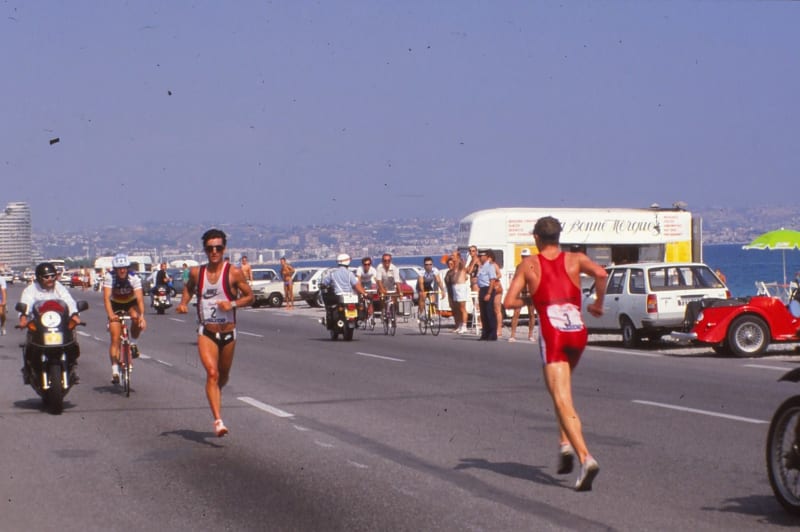
-XL distance: 4000 m swim / 120 km bike / 30 km run
This format defined the glory years of Triathlon de Nice early on, before it came under the IRONMAN label. Races offering it today are fairly rare, as it sits between L and XXL, both much more common on the calendar.
 © Triathlon de NIce
-XXL distance: 3800 m swim / 180 km bike / 42.195 km run
This is THE ultimate triathlon distance: the “Ironman,” created and popularized by the Hawaii race in 1978. The legend says it all officially began in a Honolulu bar, Le Primo, thanks to a challenge thrown down (after a few pints, no doubt) by US Navy Marines based on the islands. They argued about who was the toughest, most complete athlete: the swimmer, the runner, or the cyclist. To settle it, Commander John Collins suggested the best athlete would be the winner of a race combining the three hardest events on the archipelago:
1. The Waikiki Roughwater Swim (3.85 km swimming)
2. The Around-Oahu bike race (185 km cycling)
3. The Honolulu Marathon (42.195 km running)
Collins simply tweaked the existing routes so the finish and start points lined up on Waikiki’s shores. And he added: “Whoever finishes first, we’ll call him the Ironman.”
Nearly 50 years later, this format still pulls in hundreds of thousands of triathletes worldwide, across hundreds of races (mostly under the IRONMAN label, but not only). It’s the triathlete’s Grail. It takes a serious training load across all three disciplines, plus months of dialed-in nutrition, and above all, consistency and commitment in the build.
 © FFTRI-Maxime Delobel
 © FFTRI-Maxime Delobel
 © PuurFilm - Fabien Boukla
The current best time over this distance (we don’t talk about a world record because no two courses are truly comparable) belongs to Sam Laidlow in 7:21:04 (Challenge Roth 2026) and, for the women, Laura Philipp in 8:03:13 (IRONMAN Hamburg 2025). Average time is 12:38 for men and 13:32 for women (*).
In short: triathlon distances
- XS distance (Discovery): 400 m swim, 10 km bike, 2.5 km run
- S distance (Sprint): 750 m swim, 20 km bike, 5 km run
- M distance or CD (Short Distance): 1500 m swim, 40 km bike, 10 km run
- L distance: 3000 m swim, 80 km bike, 20 km run
- IRONMAN 70.3 triathlon distance (total distance in miles): 1900 m swim, 90 km bike, 21.097 km run
- XL distance or LD (Long Distance): 4000 m swim, 120 km bike, 30 km run
- XXL distance or Ironman triathlon: 3800 m swim, 180 km bike, 42.195 km run
So that’s a quick look at what’s waiting for you in your first triathlon. Based on your current level, your goal, and what you’re hungry for, pick your format and most of all, have a blast!
(*) The most solid data comes from IRONMAN results databases (more than 670,000 finishers in Ironman and 823,000 finishers in Ironman 70.3), supplemented by averages compiled by Triathlete.com for Sprint and Olympic formats, and by studies published in Sports Medicine and Nature.