
MIPS bike helmets: how the yellow dot protects your brain when you crash
 © MIPS
We took a close look at the MIPS protection system built into the GIRO Agilis helmet. A standard helmet shields the skull from fractures and impact trauma. MIPS goes further and protects the brain itself. Here's how it works, just as roads are about to get slick and falls more likely.
The yellow MIPS dot is now as familiar as the Vibram octagon on trail shoe outsoles or the black and gold Gore-Tex diamond on the most waterproof shells. Instantly recognizable, it has become shorthand for head protection in a cycling crash. More than 150 helmet brands now use the technology, along with nearly every pro road team.
An inner layer that moves with the brain and lowers the risk of concussion
Bike helmets fitted with MIPS (Multi-Directional Protection System) have an extra layer between your head and the outer shell, and it moves independently of that shell.
The shell and the inner liner are connected by flexible elastomer attachments. In an impact, the shell slides over the MIPS layer, which reduces the forces transmitted to the skull and lowers the risk of concussion.
 © MIPS
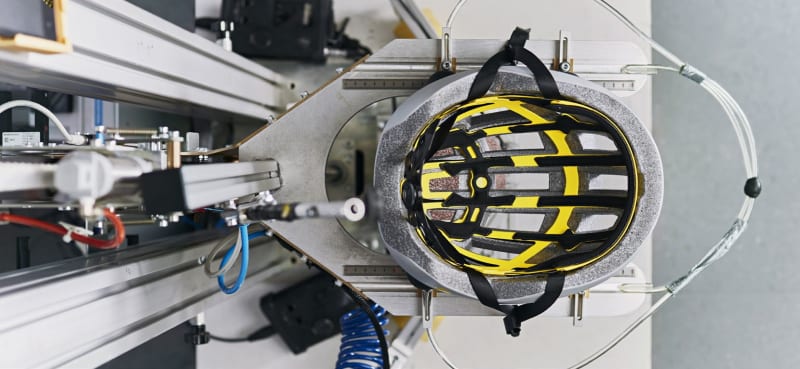
MIPS helmets work on direct, radial impacts, but they earn their keep on oblique ones, the most common kind in a bike crash. When you go down, the blow to the head is rarely straight on, whether at the forehead, the side or the back of the skull. It's usually at an angle, and the head is whipped into a sudden rotation.
When the head spins violently, brain tissue can deform or stretch, causing microtrauma that is hard to diagnose but can have lasting effects. That is exactly what MIPS is designed to limit.
 © MIPS
The concept borrows from the way the brain naturally floats inside the skull, cushioned by cerebrospinal fluid. Instead of reaching the brain directly, part of the impact energy is dissipated by a controlled slide of a few millimeters in the inner layer. That reduces rotational forces and the risk of serious brain injury.
Comfort and ventilation unchanged by MIPS
Needless to say, we didn't try to verify the system's real-world effectiveness during our test. But the brand's countless crash tests back it up.
 © MIPS
What we could test was how the MIPS membrane changes the shape and performance of the helmet once it's on your head.
On the GIRO Agilis, a mid-range model, comfort felt no different from a standard helmet.
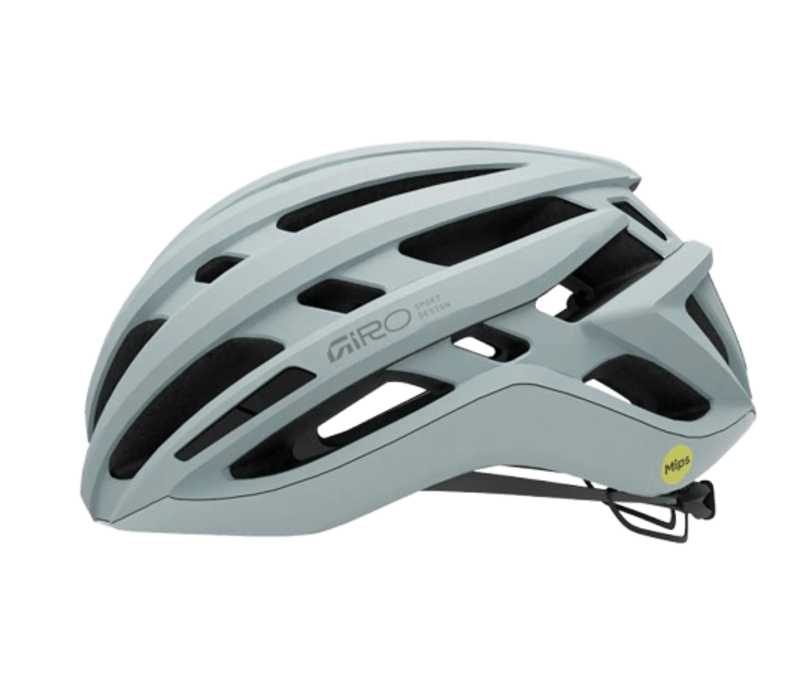
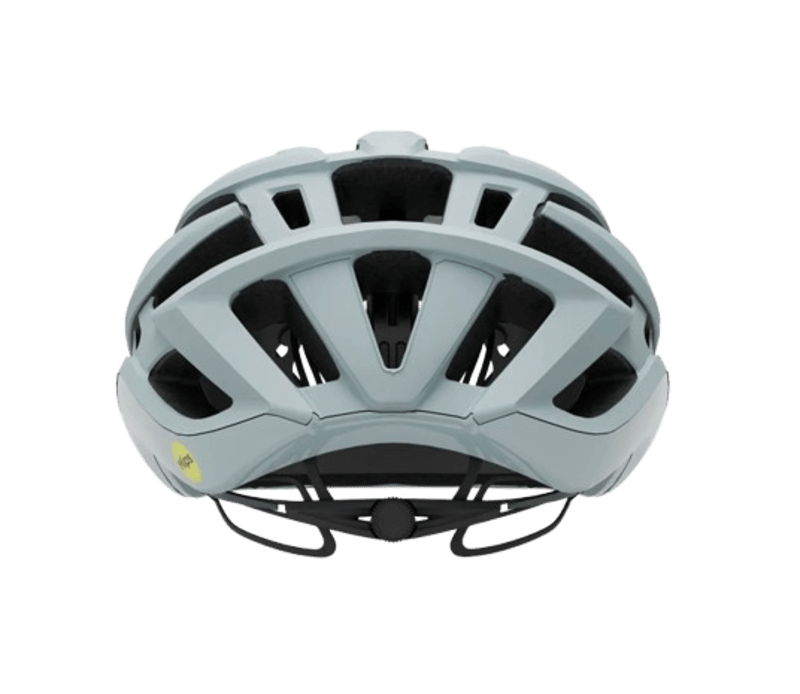
The fit is comfortable and secure thanks to the Roc Loc 5 Mips adjustment system. It lets you fine-tune both the tension and the front-to-back tilt in seconds, with one hand. It's also lighter than competing systems, which makes it a top-tier option for protection technology.
 © GIRO
 © GIRO
The MIPS liner doesn't choke off airflow, as it sometimes did on the first helmets to use the technology. This GIRO relies on its "Wind Tunnel" ventilation, which pairs active vents in the shell with internal channels that push cool air over and around the rider's head while pulling heat and stale air out.
The only real drawback is a marginal gain in weight. The MIPS layer weighs just a few grams, but that can matter to demanding riders chasing the lightest possible helmet, especially in competition.
Adding the system also pushes up the price. That's the cost of top-level protection.
Model tested
Giro Agilis MIPS
Weight: 180 g in size M
Price: €109.95