
Garmin now puts you on Waze's map: a safety boost for cyclists on the road
Published on Fri, November 13, 2026
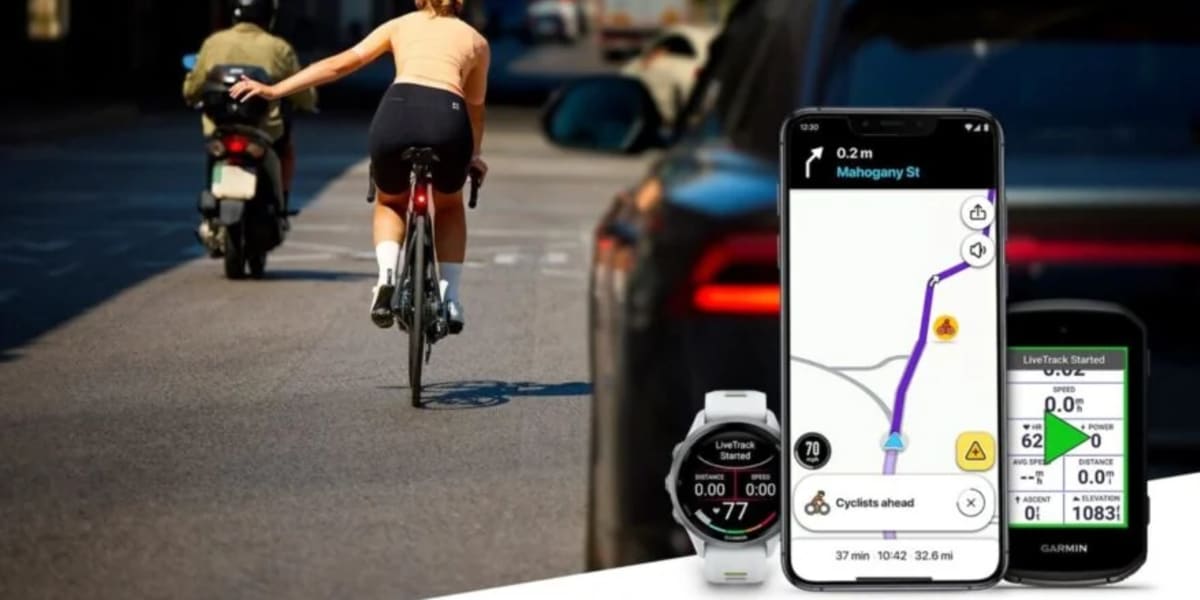 © Garmin
Garmin and Waze have launched a first-of-its-kind partnership: cyclists riding with a compatible Garmin device can now flag their presence to drivers using Waze in real time. A welcome step for road safety, especially on long training rides.
This one should catch the attention of every cyclist, from age-group triathletes to seasoned racers. On Tuesday, November 10, Garmin and Waze announced a collaboration that lets riders with a Garmin Edge bike computer or a compatible watch show up in the navigation app drivers use every day.
The idea is simple but smart: warn drivers that a cyclist is nearby before they even come across them on the road. Safety remains a major concern for anyone who rides on the road, and this initiative marks a new step in bringing sports tech and accident prevention closer together.
Garmin LiveTrack comes to Waze
To make it work, the two brands build on a feature Garmin users already know well: LiveTrack. Until now, it was mostly used to share your real-time position with friends and family, who could follow a ride, see your progress and know where you were during the session. Now it takes on an extra dimension.
By turning on the dedicated sharing option in Garmin Connect, a cyclist can allow their presence to be temporarily passed on to Waze. When you start an outdoor cycling activity on a compatible device, you appear on the map of drivers using the app. In practice, drivers see a moving cyclist icon and get an alert when a bike is nearby. The goal is to get drivers to anticipate, pay extra attention and, if needed, slow down before passing a cyclist.
A feature that matters for triathletes
For triathletes, this deserves a closer look. Long rides are a cornerstone of training, especially with an Olympic-distance race, a Half-Ironman or an Ironman on the calendar. They often mean covering dozens of kilometers on secondary roads, sometimes quiet ones where visibility can be limited.
That's exactly where prevention counts. A driver who knows a cyclist is ahead can plan the pass earlier, adjust their behavior and avoid a dangerous move.
Of course, the feature doesn't replace visibility gear, traffic rules or a rider's own vigilance. But it adds one more layer of protection, particularly welcome when you ride alone or on roads where cars and bikes don't always share space easily.
One caveat: it only works for users of compatible Garmin devices. Riders using a Wahoo, COROS or Hammerhead computer don't get this integration for now.
Privacy: your identity stays hidden
Sharing your position with an app used by millions of drivers naturally raises a few questions. Garmin and Waze have built in several safeguards. Sharing is entirely voluntary and lasts only as long as the activity. Drivers can't see the cyclist's name, identity or exact route. All they get is a notice that a cyclist is nearby.
Another reassuring detail: the broadcast stops automatically when you end your activity on your Garmin device. You get extra visibility without turning every ride into a permanent broadcast of your location.
How to turn on Waze alerts from Garmin Connect
Setup relies on Garmin Connect and the LiveTrack feature. Here are the main steps:
Update Garmin Connect: make sure you have the latest version of the app on your smartphone.
Open LiveTrack: launch Garmin Connect, then head to the safety and tracking settings.
Enable sharing with Waze: explicitly allow your position to be shared with the navigation app.
Start an outdoor bike ride: begin your activity from your Edge computer or compatible Garmin watch.
Sharing is free and, according to Garmin, doesn't require an additional Garmin Connect+ subscription. One catch: your smartphone has to stay with you, with Garmin Connect running and a working mobile connection, so your position can be transmitted.
For triathletes stacking up kilometers on country roads, this integration is a useful extra tool. It never replaces staying alert, but it gives valuable information to the people sharing the road with us. And what if Garmin tech could make every ride a little less risky? That's a direction we can only encourage.