
Six brick sessions to shake off heavy legs after the bike
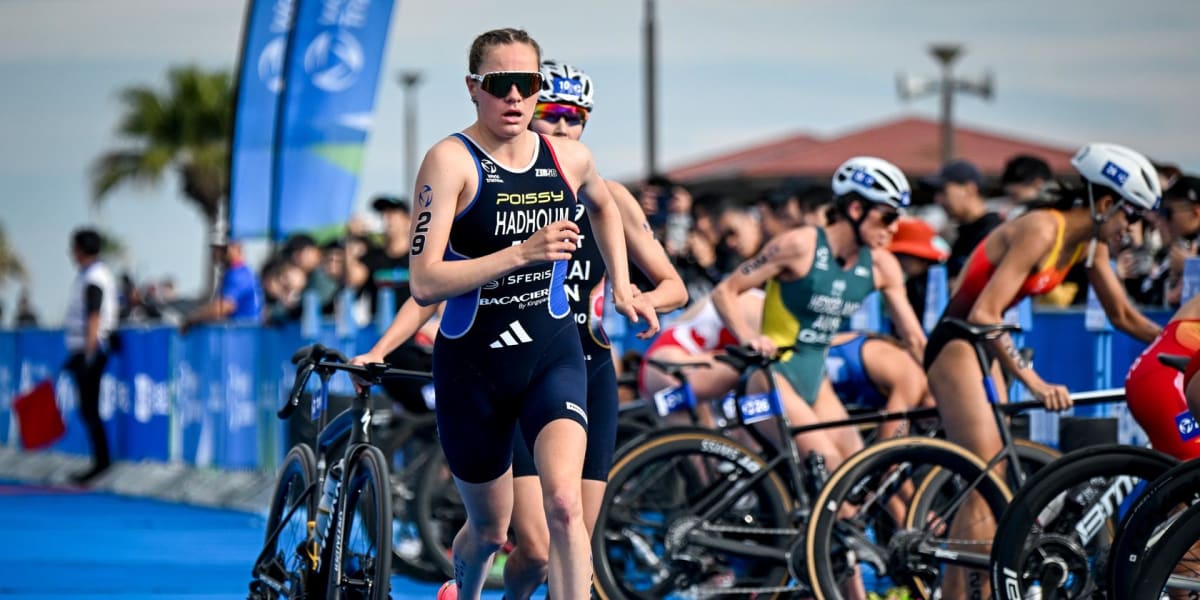 © World Triathlon
Getting off the bike and starting to run sounds simple on paper. In practice, the first kilometres on foot often feel like running on stilts. This sensation can be trained away with bricks, the back-to-back sessions that link cycling and running. Why it happens, how to reduce it and how to fit these sessions into your build: here's the breakdown.
Why do your legs feel heavy after the bike?
On the bike, the muscles work without impact, through a limited range of motion and at a pedalling cadence that differs from your running stride. When you start running, the body has to switch gears abruptly: the quads are tired, blood is still pooled in some muscle groups, and coordination takes a few minutes to recalibrate. The result is a feeling of lead and a stiff stride, even though your actual pace is often faster than it feels.
This sensation fades noticeably with training. That's exactly the point of practising bike-to-run bricks.
How do you reduce the heavy-legs effect?
Raise your cadence over the last kilometres of the ride, shifting to an easier gear.
Relax your upper body and stretch out a little on the bike before transition.
Start with a short, quick stride over the first kilometre of running, without trying to lengthen it.
Keep your pace in check on your watch: the first minutes often give a false impression of slowness.
The 6 brick sessions
1. The discovery brick
45 to 60 minutes of easy riding, then 10 minutes of easy running. The goal is simply to get your body used to the change of motion. Ideal for beginners and early in the season.
2. The race pace brick
1 hour of riding, the last 15 minutes at race pace, then 15 to 20 minutes of running at race pace. The most widely used session in sprint and Olympic-distance preparation.
3. The repeated bricks
Repeat the block 3 to 5 times: 10 minutes of hard riding + 5 minutes of hard running, with no rest between blocks. Very effective on a turbo trainer with a treadmill or a loop nearby. It rehearses the transitions and teaches you to get going again.
4. The quick transition
Repeat the block 6 times: 4 minutes of hard riding + 1 km of fast running, while working on the transition itself: dismounting, racking your helmet and cycling shoes, slipping on your running shoes and heading out. Essential for short formats, where every second counts.
5. The long brick
2h30 to 3h of riding, including blocks at race pace, then 30 to 45 minutes of running at race pace. The key session in IRONMAN 70.3 preparation, to be done every two weeks in the specific phase.
6. The IRONMAN simulation
4 to 5 hours of riding with your race nutrition, then 45 minutes to 1 hour of running at IRONMAN pace. Do it two or three times during the build, no more, with several days of recovery between each of these sessions.
Which session for your format?
Format | Priority sessions | Frequency |
|---|---|---|
Sprint triathlon | Discovery, race pace, quick transition | one per week |
Olympic triathlon | Race pace, repeated bricks | one per week |
70.3 | Long brick, race pace | one per week, including a long brick every 2 weeks |
IRONMAN | Long brick, IRONMAN simulation | one per week, 2 or 3 simulations in total |
Mistakes to avoid
Never doing bricks in training and discovering the sensation on race day.
Running too fast straight off the bike to 'shake off' the heavy legs.
Neglecting your gear: set up your shoes (elastic laces) and your transition area exactly as you would on race day.
What to remember
Heavy legs after the bike are normal and fade with training.
One brick session a week is enough for most plans.
Brick length grows with the distance of your goal.
The first minutes of running are managed with a short stride, keeping an eye on your pace.
FAQ
What is a brick session in triathlon?
It's the term used for two disciplines back to back with no break, most often cycling then running.
Should you also link swimming and cycling?
It's a lower priority, but useful now and then, especially to rehearse the transition from a horizontal swimming position to sitting on the bike.
Can you do a brick on a turbo trainer?
Yes, and it's even a practical option in winter: a turbo trainer and a running loop nearby make it easy to rehearse the transitions.