

The epic triathlon story of Nice
In a few days, Nice will host the IRONMAN 70.3 Triathlon World Championship. The perfect moment to dive back into the city’s long, sometimes unlikely relationship with triathlon, a story that’s been running for nearly 45 years.
If America has its mythical triathlon in Hawaii, then Europe has its own, in Nice.
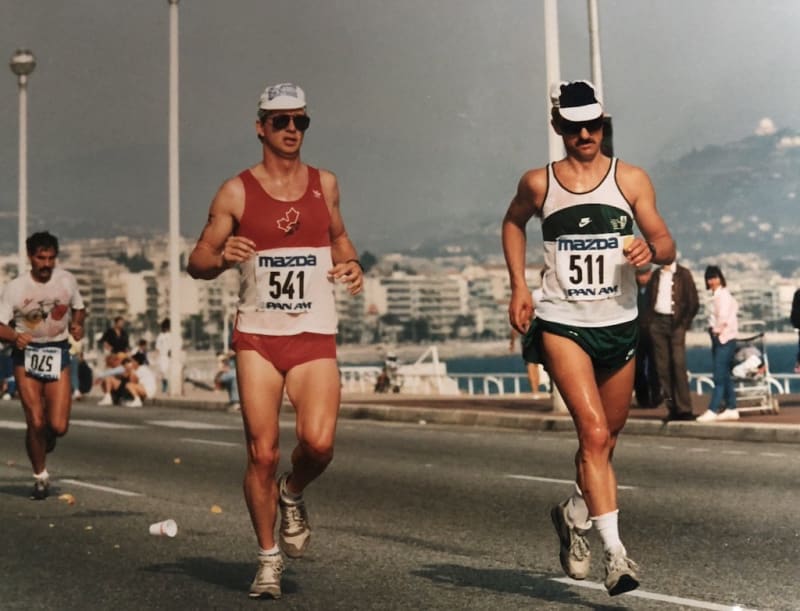
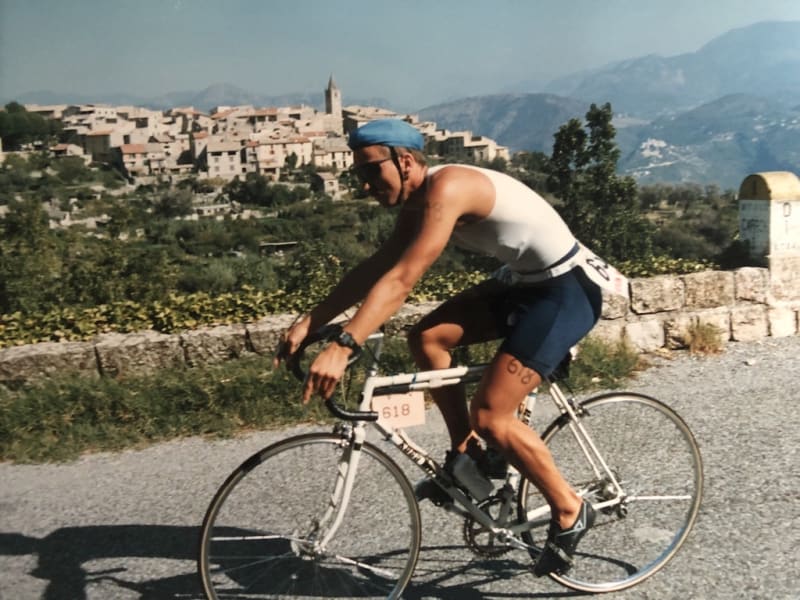
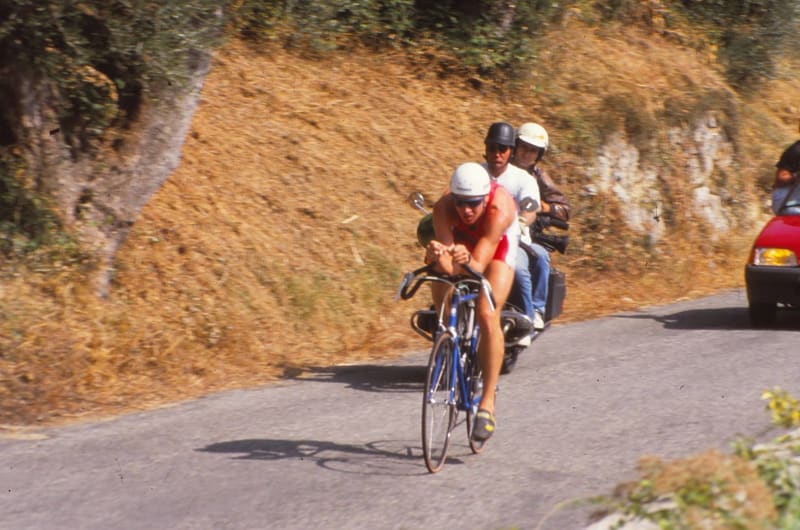
Triathlon entered Nice’s history precisely as a counterweight to the Hawaiian race, in 1982. And by a twist of fate, Nice became a powerhouse of French and world triathlon. It owes that to one man: the American Mark McCormack. A lawyer, agent for pro athletes (especially in golf and tennis), prolific author, and larger-than-life character, McCormack also founded what became one of the biggest sports marketing agencies in the world: IMG (International Management Group). Like many of his fellow Americans, McCormack was captivated in 1982 by the unforgettable images of Julie Moss crawling to the finish in Hawaii. The fearless businessman saw all the ingredients of a new modern epic. He hurried to replicate the Hawaii Ironman model in Europe to win over the Old Continent and export a formula that worked across the Atlantic.
 © Archives TIN
 © Archives TIN
 © Archives TIN
 © Archives TIN
A project first planned for Monaco
The venue seemed obvious: Monaco. But the sudden death of Princess Grace derailed the event in the Principality. McCormack didn’t want to waste a second in his race against Hawaii, so he quickly found a new home for his long-distance triathlon: Nice, the Baie des Anges, the backcountry, and the Promenade des Anglais.
Until then, long-distance triathlon was little more than a curiosity in Europe. There had been a long format (2/200/20) in Plzen, in what was then Czechoslovakia, in 1980, and other attempts in the Netherlands, Hungary, West Germany and East Germany in 1981. But no location had the pull of the French Riviera and Nice’s setting, and no organizer had McCormack’s firepower or resources.
57 pioneers on the first edition
So on November 20, 1982, France hosted its first international long-distance triathlon: a 1,500 m swim in the Mediterranean, 100 km of cycling in the hills, and 42.2 km on foot. Fifty-seven “lunatics” dove into the Baie des Anges in their swimsuits, in 14°C water, including nine French men and one French woman, Majo Bouteleux.
Forty would reach the finish line; 17 would drop out, and seven would end up in hospital. Even John Howard, the 1981 Hawaii winner, went under in the swim and had to abandon.
After the 1,500-meter swim, the Englishman Flagerty was first out of the water. He was quickly caught on the bike by Dutchman Axel Koenders, who kept the suspense alive for the full 100 km. But the marathon broke him.
A certain American named Mark Allen came through, followed by his compatriots Scott Molina, Scott Tinley, Jeff Tinley (the brother) and a few others. Allen won the inaugural race in 6:33:52. The first European was a Dutchman, Jim Koster, in 7th. The first Frenchman, Jean-Paul Theulin, finished 15th (8:14:12). Majo Bouteleux, the first French female triathlete, crossed the line in 10:41:37.
A sport made famous by an Antenne 2 TV report
A month later, Antenne 2 aired “Voyage au bout de la souffrance.” Few viewers missed it. Reviews could be savage, like that of Jacques Belin (Télérama), who wrote: “It’s probably also a record of bad taste,” or “When you try too hard to prove something, you risk achieving the opposite of what you’re aiming for.”
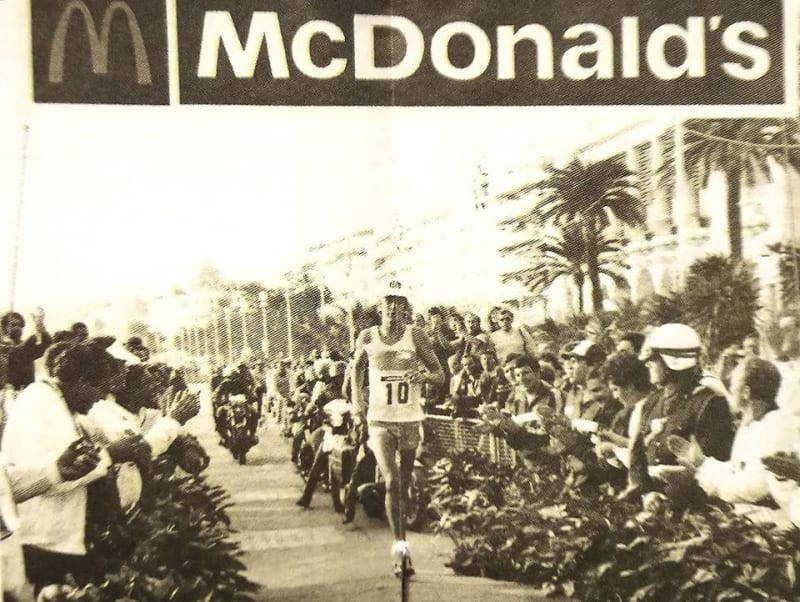
A chilly reception, but it didn’t slow McCormack down. In his battle for supremacy with Hawaii, he kept raising the stakes. In 1983, he changed the format (to 4/120/32), moved the race to September, and introduced prize money to bring in the best. The following year, more than 400 athletes packed into Nice.
 © Archives TIN
 © Archives TIN
In 1985, the prize list climbed again (including $10,000 for the winner), and appearance fees entered the picture. Rival TV networks ABC (pro-Hawaii) and CBS (pro-McCormack) went to war with dollars.
Anything went to secure the best start list and the biggest exposure. The 1985 edition was moved to October, the same month as Hawaii, forcing athletes to choose and leaving one race or the other without certain stars. That year, Nice likely pulled its strongest field yet, with the American Big Four, local hero Yves Cordier, and the top European of the era, Rob Barel.
On the women’s side were North Americans Erin Baker, Silviane Puntous, and Paula Newby Fraser. Fans could get up close to all of these stars. Triathlon in Nice built its reputation, and the buzz kept growing.
Yves Cordier caught with 800 m to go in 1992
In 1986, the 1,000-starter mark was broken. For better and for worse. In the water, outside the top 20, almost everyone shortcutted the course. On the bike, roads weren’t closed. Most riders climbed the cols in packs. There was no way to penalize that many offenders. Disgusted by the mass drafting, plenty of competitors quit during the run. The price of success?
That meltdown was quickly forgotten, and the race was tightened up for the years that followed. In 1987, Hervé Niquet became the first Frenchman on the podium (third). The next year, Rob Barel became the first European to win in Nice. Mark Allen was absent, which mattered.
 © Archives TIN
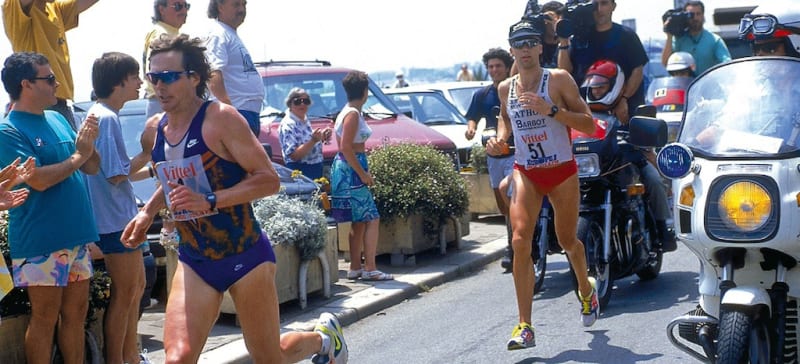
In 1991 came the first podium for Yves Cordier, the ambitious local athlete. The next year, everyone thought he’d become the first Frenchman to win in Nice. He had a 4:50 lead over Barel at the end of the bike, and nine minutes on Allen. With every TV motorbike escorting him on the out-and-back run between Nice and Antibes, Cordier became a perfect target for Allen. Little by little, the American reeled him in, before passing and “crucifying” him with 800 m to go!
Mark Allen, 10 wins on the board
It would take another 10 years (and Gilles Reboul’s victory in 2001) to see a Frenchman win the men’s race. In the meantime, Isabelle Mouthon kept the tricolor flag flying by winning the women’s race in 1993. That same year, Mark Allen claimed his 10th and final title. McCormack, having achieved his goal of creating a global event in Nice, stepped away. The wild years were over.
 © Archives TIN
The race moves under the French Triathlon Federation
The French Triathlon Federation and the City of Nice took over the event. Public authorities and the federation didn’t have the same resources as the American private group, nor the same marketing clout. The public appeal stayed strong, but the race lost some of its pull with the very best athletes. Nice was awarded several ITU Long Distance World Championships, which helped keep it on the map. The 2000s brought a “Frenchification” of the race, showcasing a brilliant French long-distance squad where François Chabaud, Gilles Reboul, Hervé Faure, Cyrille Neveu, and Julien Loy shone. After 11 editions, the FFTRI handed it over.
 © IRONMAN
IRONMAN takes the baton in 2005
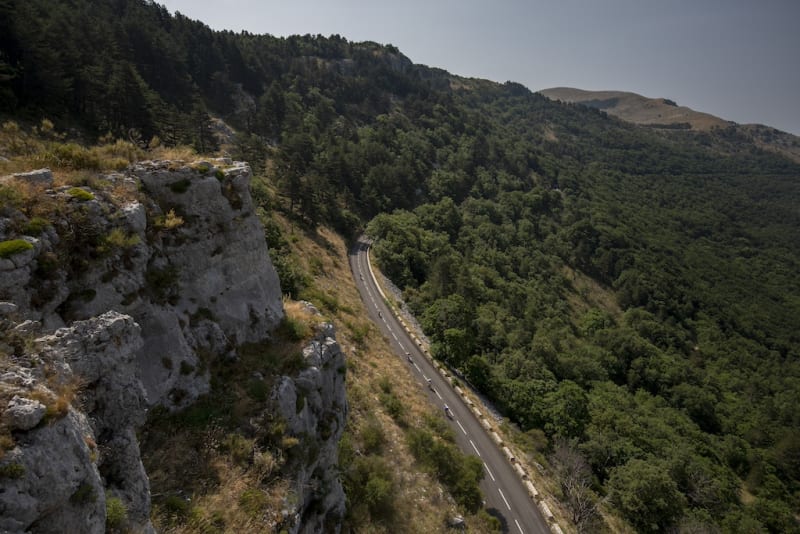
In 2005, Yves Cordier, now leading IRONMAN France, took the baton. The Ironman brand, the company’s know-how, and Cordier’s deep understanding of the sport brought the race back to life. Entries sold out months in advance. Nearly 3,000 triathletes wanted a shot at a course widely considered one of the most beautiful on the Ironman circuit. Glassy water at daybreak (most of the time), the Col d’Eze, the baked asphalt of the Promenade for a never-ending marathon: ingredients that keep the legend alive. Moved back to June, it became a major early-summer date, and a target race for athletes who train specifically for it.
A specialist’s course
Spain’s Marcel Zamora, a five-time winner, found everything he needed on this rolling course for a final tune-up before Embrun. Belgium’s Frederik Van Lierde, another five-time winner, feasted on the climbs in the backcountry, as did his compatriot Tine Deckers (also a five-time winner). Competition from Ironman Frankfurt in July, or Roth (July), plus the course difficulty, probably cost Nice even deeper fields. The biggest Ironman stars became rare in Nice. The best no longer took the gamble the way they did in the glory years, likely because the risk was too high.
 © IRONMAN
That changed when IRONMAN introduced a rotation for its marquee world final starting in 2023. A move that sparked outrage among purists and revived the Nice-versus-Hawaii rivalry. One year, Nice hosted the IRONMAN World Championship; the next year it was Kona, Hawaii. Every other year, the sport’s biggest names would come to Nice. In 2023, locals had the thrill of seeing Sam Laidlow win, becoming the first French IRONMAN world champion.
 © IRONMAN
The end of the Hawaii rotation, and races moved to September
In April 2025, IRONMAN bowed to the community’s wishes and decided to end the turn-over after 2026. Kona will permanently reclaim the IRONMAN final, bringing men and women back together in Hawaii in late October.
 © IRONMAN
 © IRONMAN
 © James Mitchell/ Red Bull Content Pull
The election of the new mayor, Eric Ciotti, in March 2026, also changes the picture: initially planned for 2026, 2028 and 2030, the IRONMAN 70.3 World Championships will now only be held there in 2026. And Nice’s traditional IRONMAN races have been moved to September (instead of June) through 2029, to ease congestion downtown and in the backcountry during peak summer.
Still, in triathletes’ hearts, Nice will always be Nice. A lighthouse in today’s packed long-distance triathlon calendar, with a History, stories, and a reach and reputation that are second to none.
Related events


More articles

Triathlon des Roses 2026 brings sporting challenge and solidarity together
Triathlon des Roses returns to Paris on September 19, combining a sporting challenge with vital support for breast cancer research.
Wed, September 9, 2026

Our pick of five triathlon bikes under €3,000
Five affordable triathlon bikes under €3,000, ideal for beginners or athletes shopping on a tight budget.
Wed, September 9, 2026

Mediterranean Games 2026: Three French top-10 finishes and a mixed relay medal
In Taranto, France bagged three top-10 sprint finishes at the 2026 Mediterranean Games and clinched a mixed relay medal.
Mon, September 7, 2026